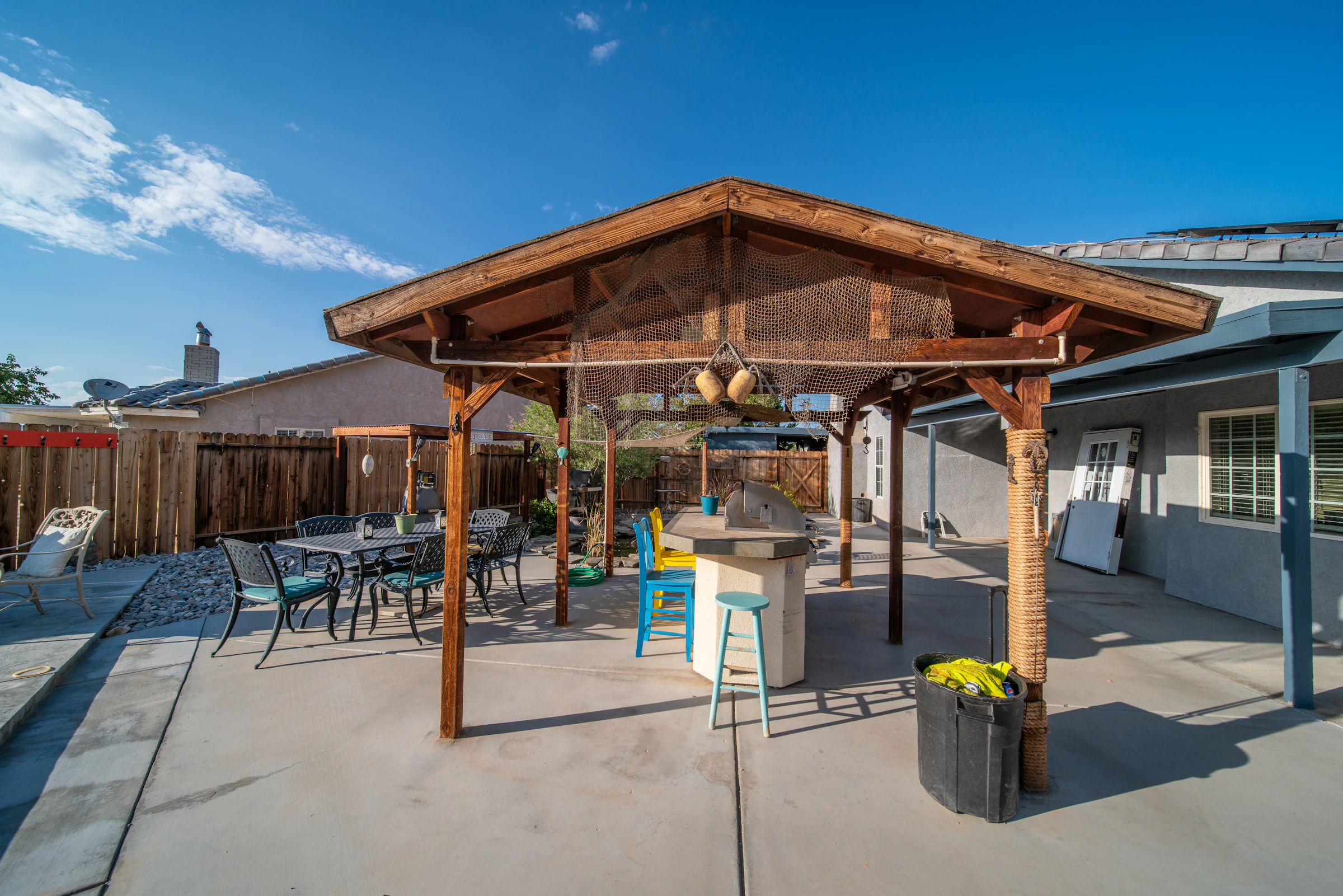
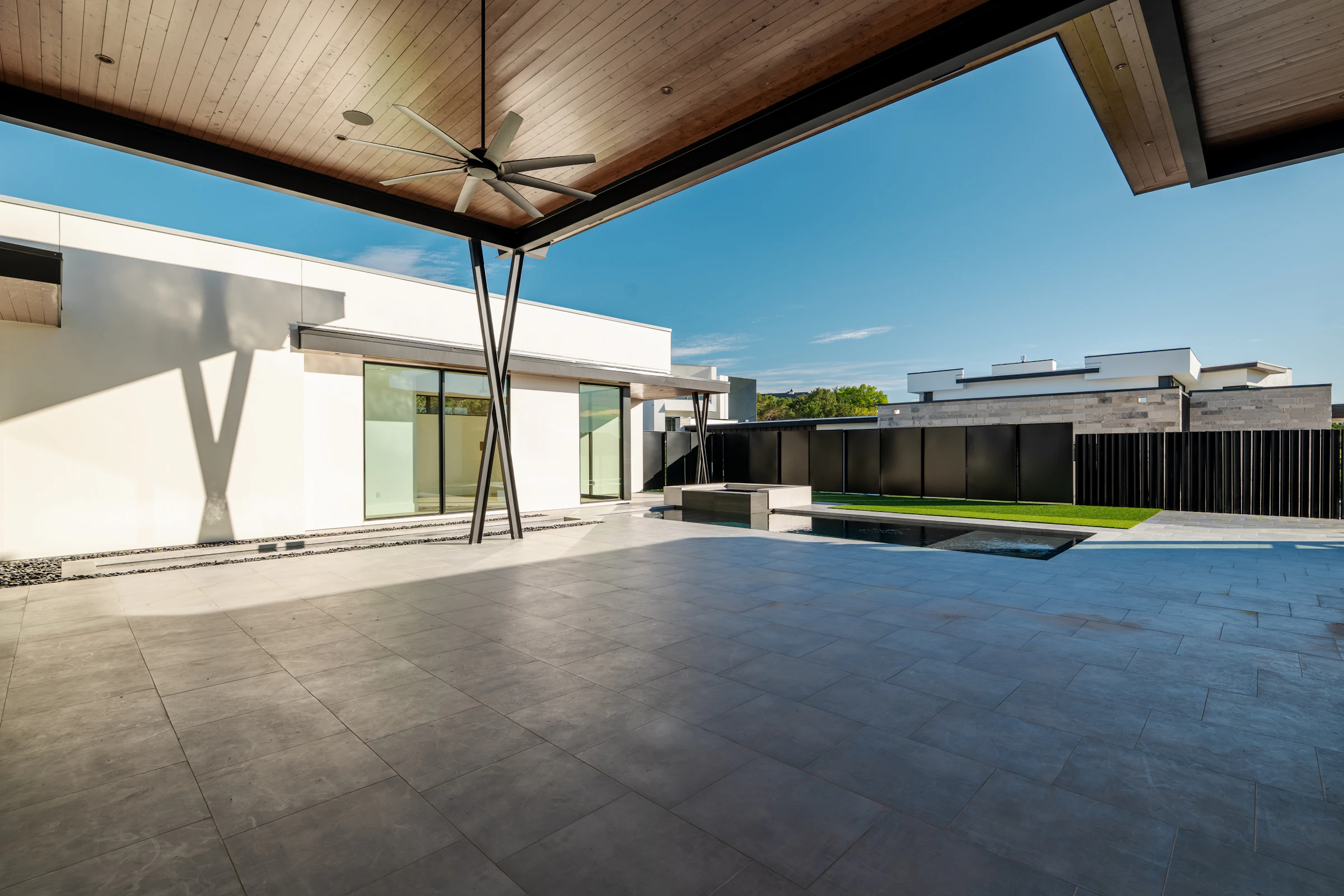
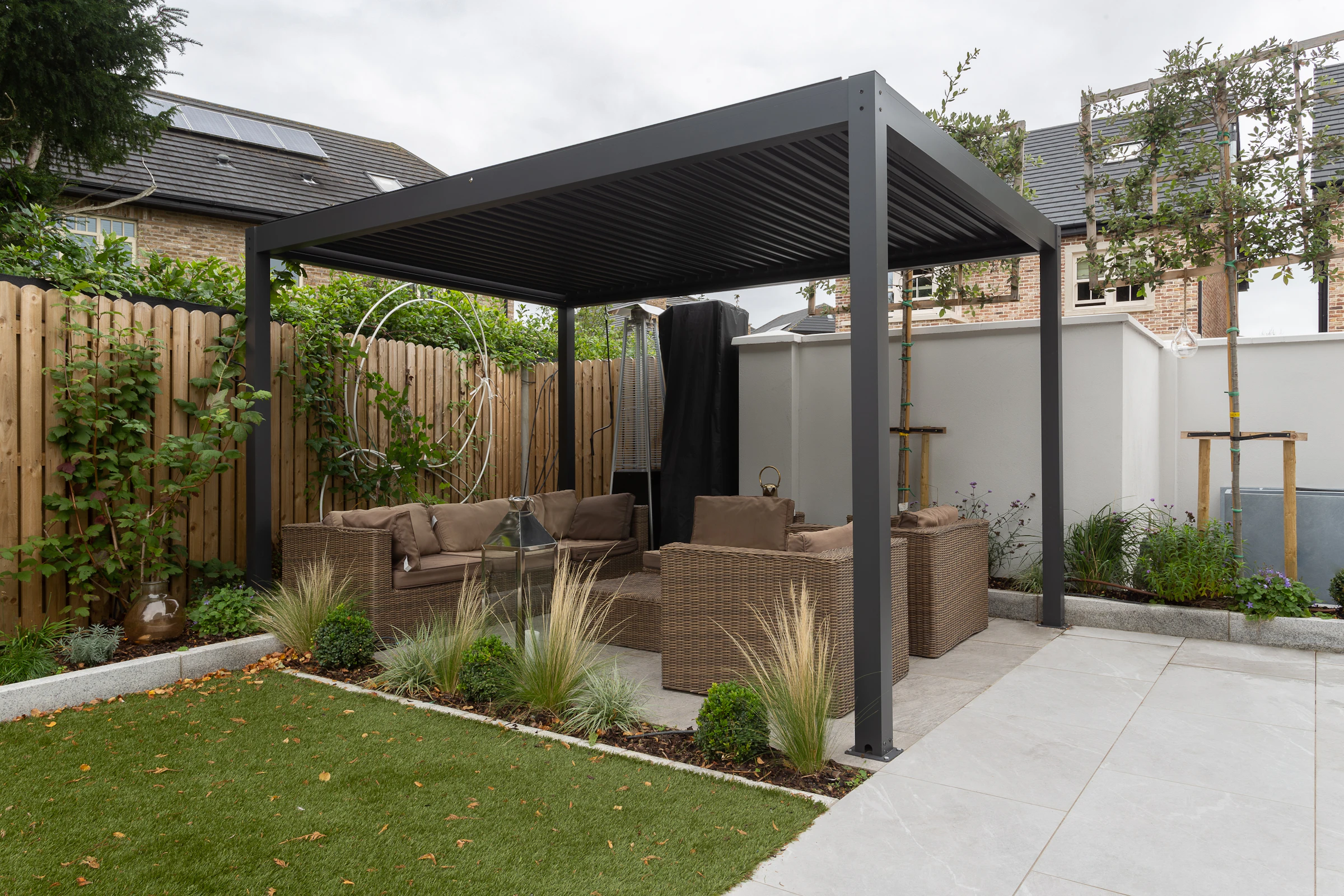
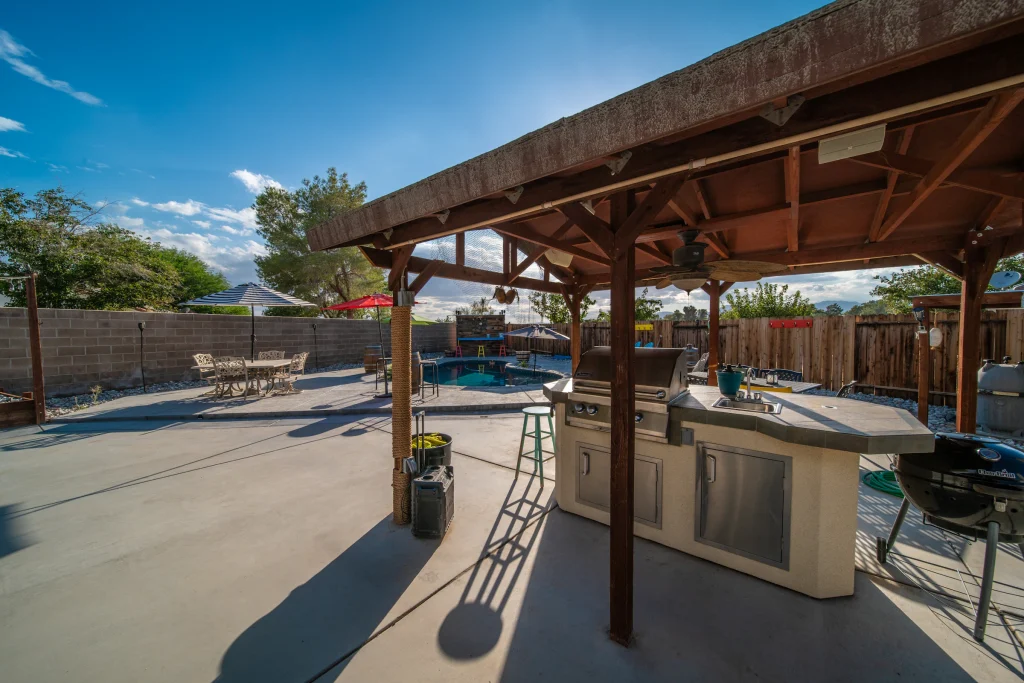
Attachment and roofline. An attached cover must connect to the house at a height that allows proper roof slope and head clearance, and must be flashed to keep water out of the wall. Low eaves sometimes push the design toward a freestanding cover or a roof-mounted connection.
Drainage. Solid covers shed a lot of water; gutters and downspouts should direct it away from the house and patio.
Lighting and fans. Planning electrical before installation keeps wiring concealed. New circuits must be installed by a licensed electrician.
Cost factors. Size, roof type (solid, insulated or lattice), material, attachment method, footings, electrical and site access.
Permits. Patio covers commonly require permits. Whether a permit is required depends on your city and the specifics of the structure — its size and height, whether it attaches to the house, its distance from property lines, its roof type and any electrical work. Burbank, Glendale and Pasadena each have their own building departments, while addresses in neighborhoods like Studio City, Sherman Oaks or North Hollywood fall under the City of Los Angeles (LADBS). We’ll help you understand what typically applies before you commit, and the local building department always has the final word.