
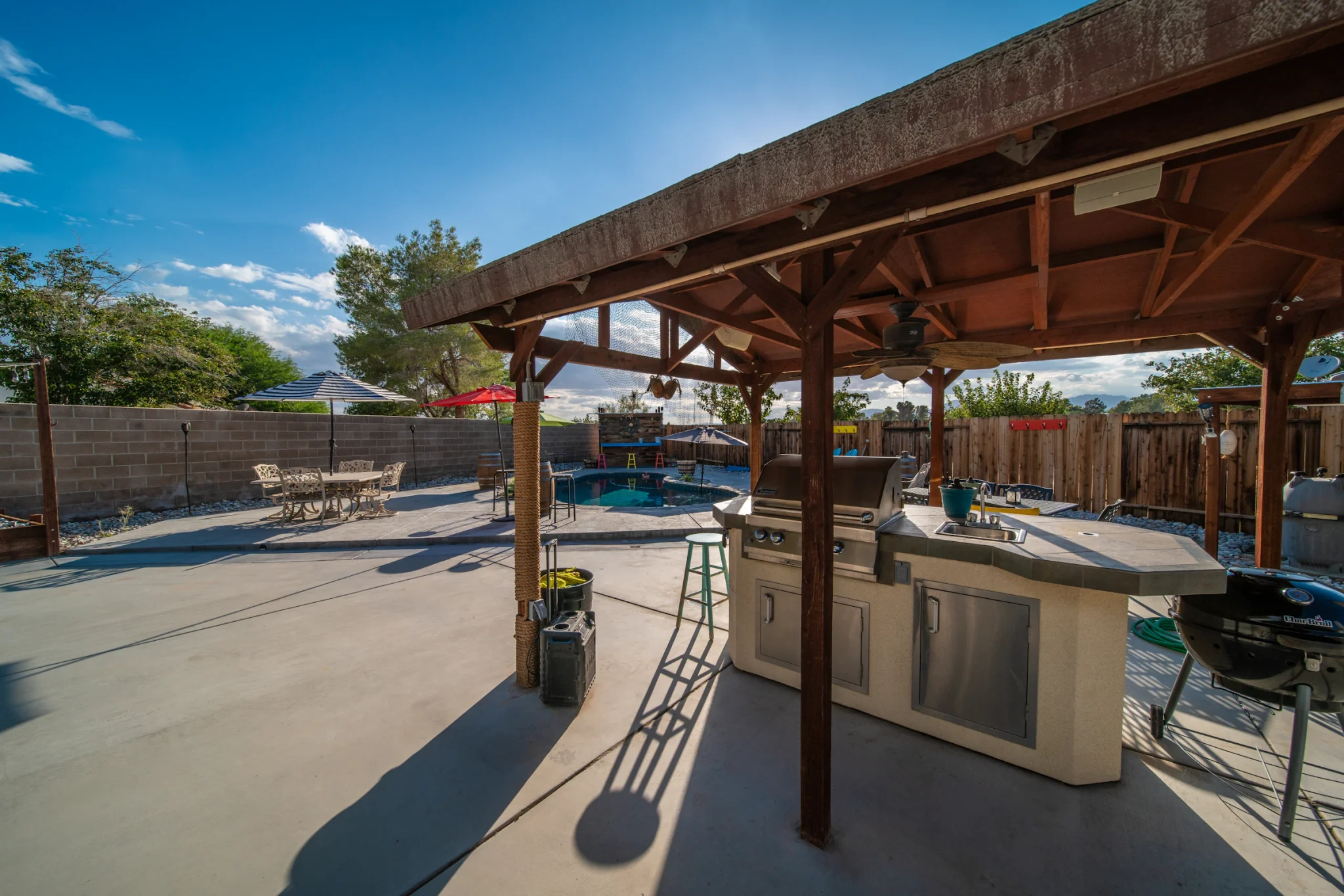
The material you choose for a patio cover affects how it looks, how cool it feels underneath, how much maintenance it needs and how long it lasts. Here’s a practical comparison.
Aluminum (solid panels)
Economical, lightweight and low maintenance, with integrated gutters. Non-insulated metal can radiate heat on hot days and can be louder in rain. Wood-grain finishes are available. See aluminum patio covers.
Insulated aluminum panels
Foam-core panels reduce heat radiating down and dampen rain noise. They often accommodate recessed lighting and give a clean, finished ceiling. A strong all-round choice for hot Valley patios.
Wood
Warm and architectural, with exposed rafters and the option to match the home’s roofing. Needs periodic sealing or painting, and fire-zone requirements may affect use near the house. See wood patio covers.
Polycarbonate and glass
Translucent roofs let light through while blocking rain, which is useful next to rooms you don’t want to darken. They can trap heat and glare in full sun; tinted or diffused panels help.
Lattice (wood or aluminum)
Filtered shade and airflow without full cover. Good where you want some sun or as a transition beyond a solid section.
Louvered systems
Adjustable blades provide shade, light or rain protection on demand. Premium cost and electrical requirements. See louvered pergolas.
How to choose
- Hottest patios: insulated panels or louvered roofs.
- Lowest maintenance: aluminum.
- Most architectural warmth: wood.
- Keep interior rooms bright: polycarbonate sections or lattice.
- Maximum flexibility: louvered.
Learn more about patio covers.
Heat, light and the house
A patio cover changes the rooms next to it. Solid covers reduce glare and heat gain through windows, which many homeowners appreciate in summer, but they also reduce daylight indoors. Insulated panels keep the space under the cover cooler. Polycarbonate sections or lattice beyond a solid area can balance shade outside with light inside. Think about how you use the adjacent rooms before choosing.
Maintenance at a glance
- Aluminum and insulated panels: occasional washing; keep gutters clear.
- Wood: periodic sealing, staining or painting, plus inspection for cracks and soft spots.
- Polycarbonate: gentle cleaning to keep panels clear; avoid abrasive cleaners.
- Louvered systems: clean blades and gutters; follow manufacturer guidance for motors and sensors.
Fire and code considerations
In very high fire hazard severity zones, attached structures may be subject to stricter construction requirements. Patio covers commonly require permits regardless of material. Requirements vary by city, so confirm with your local building department.
Frequently asked questions
Which patio cover is quietest in rain?
Insulated panels and wood with solid roofing are generally quieter than thin, non-insulated metal.
Can I add lights and fans?
Yes. Insulated panels often accept recessed lights, and most covers can be designed for fan mounting. Electrical work requires a licensed electrician.
Which lasts longest?
Quality aluminum systems need the least maintenance to keep performing. Well-maintained wood covers also last for many years.
Talk it through with GaziBoys
Every backyard is different, and the best answer for your home depends on your space, your sun exposure and how you want to use it. GaziBoys is based in Burbank and works with homeowners across Greater Los Angeles. Request a free estimate or call (747) 344-7727 to talk about your project.