
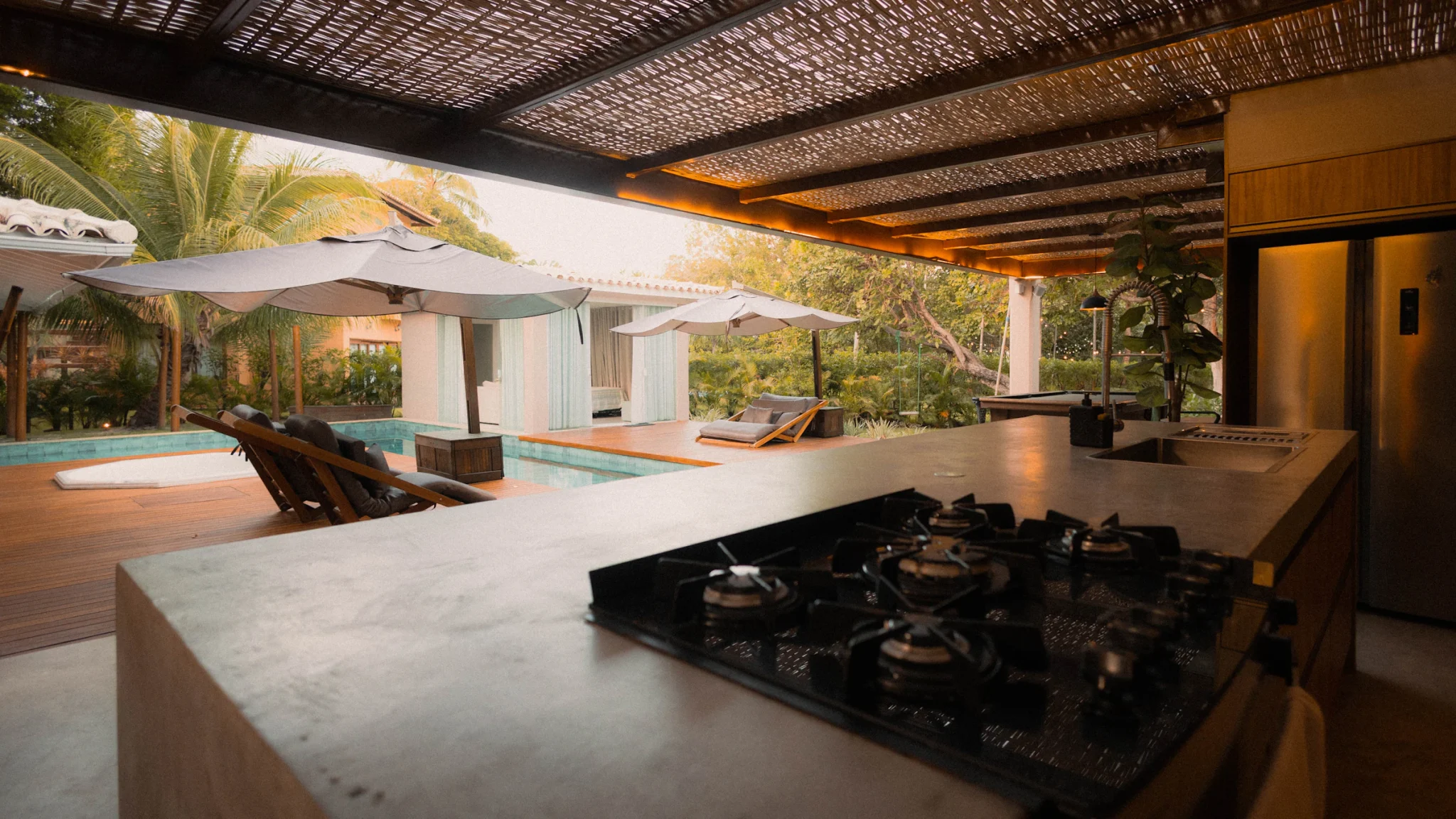
A BBQ island is often the first step toward a full outdoor kitchen. Good planning ensures it’s comfortable to cook at, safe and built around the right equipment.
Step 1: Decide how you’ll use it
Weeknight grilling for two? Weekend parties for twenty? Your answer drives the size, the number of appliances and whether you need seating.
Step 2: Choose the location
Consider proximity to the indoor kitchen, prevailing wind and smoke, sun and shade, views and where guests will gather. Keep the grill a safe distance from the house and anything combustible, following manufacturer clearances.
Step 3: Pick the shape
Straight islands are compact; L-shapes add prep space and a bar; U-shapes create a full cooking station. See BBQ islands for examples.
Step 4: Select appliances first
Choose the grill, side burner, refrigerator, access doors and drawers before construction begins. Each has specific cut-out dimensions, and some grills require insulated jackets in combustible islands.
Step 5: Plan counter space
Allow generous landing space on both sides of the grill. If you’re adding bar seating, plan a proper overhang and support.
Step 6: Choose materials
Non-combustible framing with stucco, stone veneer, tile or porcelain finishes is common. For countertops, consider UV resistance, heat tolerance and staining.
Step 7: Plan utilities
Natural gas or propane, electrical for refrigeration and lighting, and plumbing for a sink must be installed by appropriately licensed professionals, typically with permits. Gas islands also need ventilation panels to prevent gas buildup.
Step 8: Add shade and light
A patio cover or pergola makes the island usable in summer; task lighting makes it usable after dark.
Step 9: Prepare the base
Islands are heavy and need a solid, level foundation such as a suitable slab or footing.
Explore built-in BBQ installation and outdoor kitchens.
Common BBQ island mistakes
- Choosing appliances after the island is built, then discovering the cut-outs don’t fit.
- Too little counter space beside the grill.
- No ventilation panels on gas islands.
- Building with combustible framing without the jacket a grill manufacturer requires.
- Placing the grill where smoke blows into seating or the house.
Frequently asked questions
Natural gas or propane?
Natural gas means no tanks to refill but requires a gas line installed by a licensed professional. Propane is flexible but needs tank storage and refilling. The grill must match the fuel type.
Can I add a refrigerator?
Yes, with an outdoor-rated unit and a dedicated electrical supply installed by a licensed electrician.
Do I need a roof over my BBQ island?
Not necessarily, but shade makes summer grilling far more comfortable. If you add a cover, follow grill clearance and ventilation requirements carefully.
Talk it through with GaziBoys
Every backyard is different, and the best answer for your home depends on your space, your sun exposure and how you want to use it. GaziBoys is based in Burbank and works with homeowners across Greater Los Angeles. Request a free estimate or call (747) 344-7727 to talk about your project.