
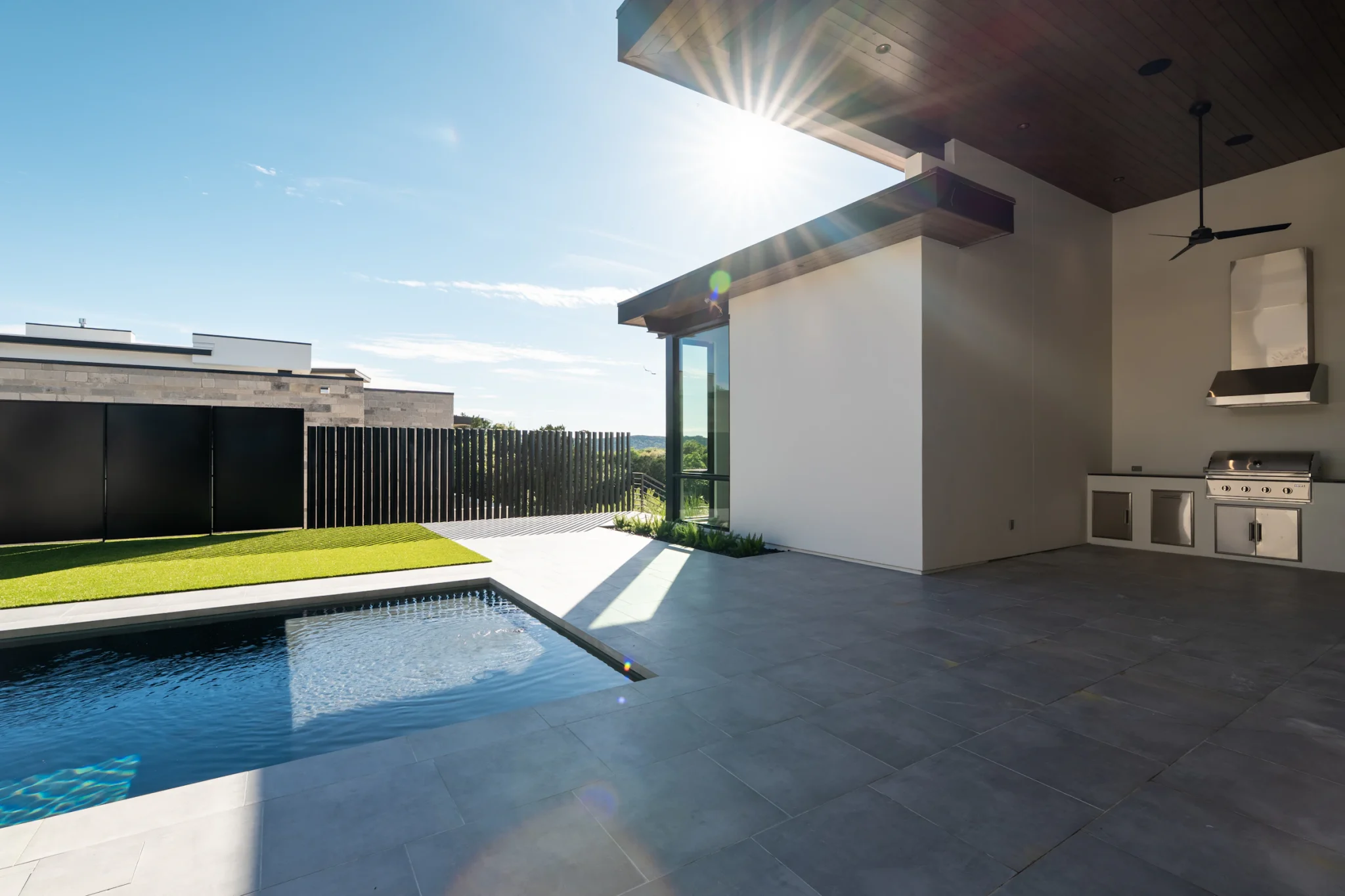
Louvered pergolas, with roofs of rotating aluminum blades, have become one of the most requested outdoor structures in Southern California. They’re impressive, but they’re also a significant investment. Here’s a balanced look.
How they work
The roof is made of blades that pivot. Open, they let in light and air; angled, they block direct sun while allowing airflow; closed, they interlock to form a solid roof and channel rain into gutters in the frame. Most are motorized, controlled by remote, wall switch or app.
Benefits
Adjustable comfort
You can tune sun and shade throughout the day and across seasons without moving furniture.
Rain protection
Closed blades provide cover for most rain, keeping furniture and guests dry.
Modern aesthetics
Slim frames and hidden drainage suit contemporary homes.
Integrated features
Many systems offer LED lighting, sensors, heaters and side screens designed to work together.
Low-maintenance materials
Powder-coated aluminum doesn’t need staining or painting.
Limitations
Cost
Louvered systems typically cost considerably more than fixed pergolas or simple patio covers of the same size.
Electrical requirements
Motors, lighting and sensors need power, installed by a licensed electrician, often with a permit.
More components
Motors, seals and sensors are mechanical and electronic parts that may eventually need service. Check manufacturer warranties.
Debris
Leaves, pods and dust collect on blades and in gutters, especially under trees. Periodic cleaning is required.
Permits
Because they can close into a solid roof, louvered pergolas are often reviewed like patio covers.
Side exposure
A roof can’t stop low-angle sun or wind-driven rain from the sides; screens help.
Who they suit best
- Homeowners who want one outdoor room that works in sun, shade and light rain.
- Contemporary homes where clean lines matter.
- Outdoor kitchens and dining areas used year-round.
If you mainly need fixed shade, a slatted aluminum pergola or aluminum patio cover may be more cost-effective. Learn more about louvered pergolas.
Questions to ask before buying
- What size and configuration do I need, and where will water drain?
- Is the system motorized, and what power and controls does it require?
- What warranties cover the frame, finish, motors and electronics?
- How will it be anchored, and does my site need new footings?
- Will my city review it like a patio cover?
- What accessories (lighting, screens, heaters) are compatible?
Alternatives worth considering
If the goal is mainly shade, a fixed slatted aluminum pergola or an insulated patio cover may meet your needs at a lower cost. If you want flexibility without a full louvered system, a pergola with a retractable fabric canopy is another option.
Frequently asked questions
Do louvers work during Santa Ana winds?
Follow the manufacturer’s guidance for high winds; many systems recommend opening the blades, and some offer wind sensors to do it automatically.
Can louvered roofs be added to an existing pergola?
Usually not directly. Louvered systems are engineered as complete structures, but some can be installed over or alongside existing patios.
Talk it through with GaziBoys
Every backyard is different, and the best answer for your home depends on your space, your sun exposure and how you want to use it. GaziBoys is based in Burbank and works with homeowners across Greater Los Angeles. Request a free estimate or call (747) 344-7727 to talk about your project.